Tuesday, January 4, 2011

How to Make a Proper Cup of Tea

How To Make a Decent Cup of Tea

Ignore Yoko Ono and John Lennon, and heed George Orwell's tea-making advice.

Woman making tea. Now that "the holidays"—at their new-style Ramadan length, with the addition of Hanukkah plus the spur and lash of commerce—are safely over, I can bear to confront the moment at their very beginning when my heart took its first dip. It was Dec. 8, and Yoko Ono had written a tribute to mark the 30th anniversary of the murder of her husband. In her New York Times op-ed, she recalled how the two of them would sometimes make tea together. He used to correct her method of doing so, saying, "Yoko, Yoko, you're supposed to first put the tea bags in, and then the hot water." (This she represented as his Englishness speaking, in two senses, though I am sure he would actually have varied the word order and said "put the tea bags in first.") This was fine, indeed excellent, and I was nodding appreciatively, but then the blow fell. One evening, he told her that an aunt had corrected him. The water should indeed precede the bags. "So all this time, we were doing it wrong?" she inquired. "Yeah," replied our hero, becoming in that moment a turncoat to more than a century of sturdy Liverpool tradition.
I simply hate to think of the harm that might result from this. It is already virtually impossible in the United States, unless you undertake the job yourself, to get a cup or pot of tea that tastes remotely as it ought to. It's quite common to be served a cup or a pot of water, well off the boil, with the tea bags lying on an adjacent cold plate. Then comes the ridiculous business of pouring the tepid water, dunking the bag until some change in color occurs, and eventually finding some way of disposing of the resulting and dispiriting tampon surrogate. The drink itself is then best thrown away, though if swallowed, it will have about the same effect on morale as a reading of the memoirs of President James Earl Carter.
Now, imagine that tea, like coffee, came without a bag (as it used to do—and still does if you buy a proper tin of it). Would you consider, in either case, pouring the hot water, letting it sit for a bit, and then throwing the grounds or the leaves on top? I thought not. Try it once, and you will never repeat the experience, even if you have a good strainer to hand. In the case of coffee, it might just work if you are quick enough, though where would be the point? But ground beans are heavier and denser, and in any case many good coffees require water that is just fractionally off the boil. Whereas tea is a herb (or an herb if you insist) that has been thoroughly dried. In order for it to release its innate qualities, it requires to be infused. And an infusion, by definition, needs the water to be boiling when it hits the tea. Grasp only this, and you hold the root of the matter.
Advertisement
Just after World War II, during a period of acute food rationing in England, George Orwell wrote an article on the making of a decent cup of tea that insisted on the observing of 11 different "golden" rules. Some of these (always use Indian or Ceylonese—i.e., Sri Lankan—tea; make tea only in small quantities; avoid silverware pots) may be considered optional or outmoded. But the essential ones are easily committed to memory, and they are simple to put into practice.
If you use a pot at all, make sure it is pre-warmed. (I would add that you should do the same thing even if you are only using a cup or a mug.) Stir the tea before letting it steep. But this above all: "[O]ne should take the teapot to the kettle, and not the other way about. The water should be actually boiling at the moment of impact, which means that one should keep it on the flame while one pours." This isn't hard to do, even if you are using electricity rather than gas, once you have brought all the makings to the same scene of operations right next to the kettle.
It's not quite over yet. If you use milk, use the least creamy type or the tea will acquire a sickly taste. And do not put the milk in the cup first—family feuds have lasted generations over this—because you will almost certainly put in too much. Add it later, and be very careful when you pour. Finally, a decent cylindrical mug will preserve the needful heat and flavor for longer than will a shallow and wide-mouthed—how often those attributes seem to go together—teacup. Orwell thought that sugar overwhelmed the taste, but brown sugar or honey are, I believe, permissible and sometimes necessary.
Until relatively few years ago, practically anything hot and blackish or brackish could be sold in America under the name of coffee. It managed both to be extremely weak and extremely bitter, and it was frequently at boiling point, though it had no call to be. (I use the past tense, though there are many places where this is still true, and it explains why free refills can be offered without compunction.) At least in major cities, consumers now have a better idea how to stick up for themselves, often to an irksome degree, as we know from standing behind people who are too precise about their latte, or whatever it's called.
Next time you are in a Starbucks or its equivalent and want some tea, don't be afraid to decline that hasty cup of hot water with added bag. It's not what you asked for. Insist on seeing the tea put in first, and on making sure that the water is boiling. If there are murmurs or sighs from behind you, take the opportunity to spread the word. And try it at home, with loose tea and a strainer if you have the patience. Don't trouble to thank me. Happy New Year.

Saturday, January 1, 2011

Delicious Low-Carb Pannacotta


Low-Carb Pannacotta                       

Serves 6

Ingredients:
3 sheets gelatin (9x2.5 inch sheets)
1 cup whole milk
2 cups heavy cream
½ cup sugar substitute*
6 teaspoons molasses
6 teaspoons balsamic vinegar (blackberry preferred)
assorted seasonal berries, for serving

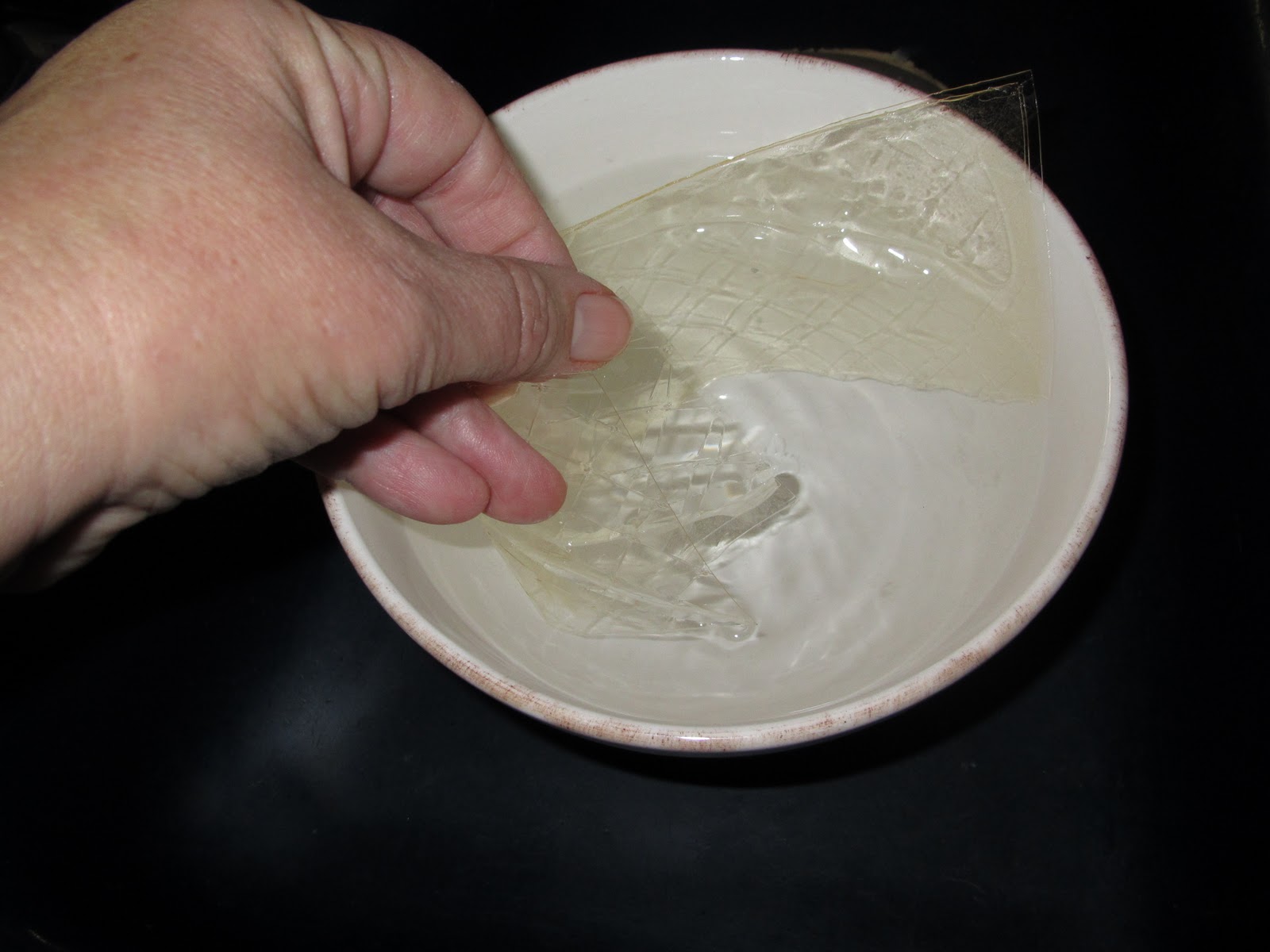
Place the gelatin sheets in a bowl and cover with cold water.  Soak for 2 to 3 minutes, until softened.  Drain and squeeze any excess water from the sheets.

In a large saucepan or double boiler over medium heat, combine the milk and heavy cream, stirring continuously.  Add gelatin and gradually add sugar substitute.  Bring to a gentle boil.  Stir mixture, making sure that the gelatin is well-dissolved, and remove from heat.

In 6 small glass custard bowls, put 1 teaspoon of molasses and 1 teaspoon of balsamic vinegar.  Carefully ladle equal portions of the heated mixture into each bowl and cover with plastic wrap.  Refrigerate overnight, or at least 8 hours.

Unmold onto individual serving plates.  If pannacotta does not unmold easily, use a knife to loosen the edges and this will usually do it.  I find that inserting a knife all the way to the base of the bowl, placing the plate over the bowl and inverting usually unmolds the pannacotta.  Dress with miscellaneous berries and serve.

*I use a combination of Splenda and Wholesome Organic Zero for this dish.
add 1 tsp each of these to bottom of custard dishes


here are the 2 sweeteners I used is place of sugar, in equal parts


gelatin sheets


hydrate them in cool water until soft, then squeeze excess water before adding to double boiler

double boiler


bring to a gentle boil after adding ingredients.
Stir continuously, making sure that the gelatin is completely dissolved

ladle equal portions into prepared custard dishes.
Cover with saran wrap

Place in refrigerator and chill for between 8-24 hours prior to serving

gently turn pannacotta onto plate.
You may run a knife around the edge prior to plating.

Happy New Year, from my family to yours!

I wish you and those you love the very best in the coming year.
May we all have many opportunities to gather those we love together
frequently, and celebrate the joy of preparing wonderful food together.

Jamie and I are so happy to share our love of cooking with you.
Please let us hear from you!

Saturday, December 25, 2010

Eggs Benedict with Cornmeal-Rye pancakes

Eggs Benedict is a Christmas morning tradition in the Jenison household.  We get up, make coffee, open presents for awhile, then stop and make brunch.  This year I decided to change the bread component in the dish.  A friend of ours cooked cornmeal-rye pancakes during a recent stay.  It occurred to me that these would be good sweet or savory, potentially perfect for eggs benny!

Ingredients:
eggs
canadian bacon
hollandaise sauce (I buy prepared to save time)
english muffins, toasted, or cornmeal rye pancakes, prepared and kept warm in oven
smoked paprika
salt and pepper

Pancake ingredients:
1 cup cornmeal
1/2 cup rye flour
2 cups buttermilk
1 teaspoon salf
1/2 teaspoon baking soda
3 tablespoons butter, melted

Mix the cornmeal, rye flour, salt, and baking soda together in a large bowl.  Stir in the butter and buttermilk, and mix until blended.
Heat a griddle to medium hot and film with grease.  Spoon on about 2 tablespoons batter for each pancake.  Cook until a few bubbles form on top, turn the pancakes over, and cook until the bottoms are lightly browned.  Serve hot (or keep warm until eggs are prepared, then assemble each portion).

Heat canadian bacon and hollandaise sauce to serving temperature.  Keep warm until eggs are cooked.

To poach an egg, fill a pot to twice the depth of an egg with water.  Add a 1/2 tsp of salt, and a tablespoon of vinegar.  Bring water to a near-boil.  Swirl the water around madly with a spoon, and while water is swirling add the egg.  Cook at medium temp for 5 minutes, then ladle egg and drain with a slotted spoon.

To assemble:  place cornmeal rye cake on plate, top with one slice of canadian bacon, one egg, the top with hollandaise sauce, a pinch of paprika, and salt and pepper to taste.  Serve immediately.

Hint:  You may wish to prepare all the ingredients in advance and keep warm until all the eggs have been poached, then assemble and serve.

The consensus was the cornmeal rye cakes were delicious under the eggs benedict.  I actually preferred them over English muffins because they were nuttier tasting and easier to eat.  Try them and let me know what you think!

The cornmeal rye pancake recipe comes from our friend Teller via The Breakfast Book by Marion Cuningham, Knopt publisher.
eggs poaching in a pan of water

half-eaten eggs benny

the smoked paprika really adds to the flavor of the dish-yum!

Friday, December 24, 2010

Grandma Norm's Famous Holiday Sugar Cookes

Nothing says Christmas like beautifully decorated sugar cookies!  Each year we make and bake off a batch of these buttery cookies.  It just wouldn't be Christmas without them.
Below you will see what happens when 3 art school kids get hold of sugar cooke dough.  I can't find the naked women cookies, but be assured that I will post them when they surface.  In the meantime, here is my mother-in-law's famous recipe, along with photos.  Enjoy!


Grandma Norm’s Xmas Sugar Cookies

Ingredients

2 cups sugar
2 cups butter
3 eggs
6 cups flour
1 teaspoon soda
1 slightly rounded teaspoon salt
1 tsp vanilla
½ teaspoon almond extract (optional)
finely chopped zest from one-two lemons (optional)

Cream butter and sugar together until fluffy.  Add eggs, vanilla, and optional ingredients.  Gradually add flour.  The dough will become very dry.
Cover and refrigerate until dough is chilled through. 

Roll dough in roughly one cup increments to ¼ inch thickness.  Use a dusting of flour on work surface and rolling pin to prevent sticking. 
Cut cookie shapes and place on cooking baking sheet.  You may wish to place on parchment paper or a silpat.

Bake at 350 for 8=12 minutes, depending on personal preference.

Frost and decorate!

*Optional ingredients were added by Leslie to this recipe over the years to adjust for taste.

a custom designed cookie depicting our Schnauzer, Bizzi
I'm sure you all remember the Furby craze....

the contoured pear
Claire at the cookie decorating station

Claire frosts cookies while Natalie supervises

a selection of fantastic cookies

Luren offers a selection to her father


Thursday, December 23, 2010

Green Chicken Chili with Truffle-oiled croutons

This is a quick and wonderful meal to use for leftover chicken or turkey, as well as a rotisserie chicken from the store.

Ingredients:
cooked chicken or turkey, shredded or cubed
cooked bacon or speck, chopped
onion, chopped,
2 garlic cloves, finely chopped
one jar green chili stew
olive oil, 1-2 tablespoons

Optional:
shredded cheese
sour cream
avocado, cut into large chunks
croutons

To prepare:
Sautee onion and garlic in olive oil in a large soup pan or stockpot.  Add chopped bacon and heat through.  Add chicken or turkey, then add green chili stew.  Heat approximately 15 minutes on medium heat.

In the meantime, prepare croutons.
Optional ingredients may be added as garnish just prior to serving.  Enjoy!

chicken, roasted in the slow-cooker (not recommended!)

speck, oven-cooked and chopped

onion and garlic sauteing in a stock pot

roasted chicken is chopped and added to pot

green chili stew is added to pot

add chicken broth to desired consistency

ingredients finish heating


 For croutons:
mix small amount truffle oil with grapeseed or other plain olive oil

use a pastry brush to add oil to surface of bread

"paint" the bread with the oil mixture, then cube the bread prior to sauteing in pan

add to sautee pan.  Cook on medium heat until croutons are toasted on all sides.  Turn frequently.


Standing Rib Roast with roasted sweet potatoes & onions, sauteed mushrooms, spinach with speck, craisins, and pinon nuts

This is the first time I have cooked a standing rib roast.  I don't know why I waited so long:  this was delicious and so easy to do!

Ingredients:
one standing rib roast (mine was 7.25 lbs)
olive oil
salt and pepper (optional)
balsamic vinegar (optional)
1/2 cup red wine (optional)
2 garlic cloves, thinly sliced (optional)

Preheat oven to 200 degrees.  That's right:  200 degrees!

Make several thin slices into the surface of the roast and insert the garlic slivers.  Rub surface of roast with olive oil, then salt and pepper.  Tie the roast in at least 3 places between ribs.  This assures even cooking and prevents the roast from falling apart.

Over the stove, preheat a heavy Dutch oven.  Sear the roast on 4 sides, turning after about 3 minutes per side.  Drizzle a small amount (2-3 tablespoons) balsamic vinegar over the roast and place the Dutch oven into the low-heat oven.  Cook the roast until the internal temperature reads 110 degrees.  Be sure the thermometer does not contact the bone when measuring.  Add the red wine by pouring over the roast. Raise the oven temperature to 500 degrees for approximately 10-15 minutes, or until internal temperature reaches 130 degrees.  Remove from oven and allow roast to rest for 20 minutes prior to carving.  Serve with a pan reduction of the juices from the roast.
This is the juiciest, most evenly cooked roast I have ever tasted.  The recipe is a loose interpretation of the recommended cooking method from Cook's Illustrated Best Recipes cookbook.  I added a few things.  It is fantastic!  It got rave reviews from the fam.
Here is my Costco-acquired rib roast

I used the grapeseed oil to rub over the meat prior to serving. 
I rubbed a small amount of the truffle oil, along with the blackberry balsamic vinegar, prior to inserting the roast in the oven

slices of garlic were placed in small cuts in the roast surface

roast is seared in the Dutch oven on the stove


just out of the oven, the roast will "rest" for 20 minutes prior to carving.

Perfect, juicy, tender, and flavorful.

A simple combination of cross-cut slices of sweet potato and onion.
roasted until onions are slightly caramelized and sweet potatoes soft.  
Toss in olive oil, salt and pepper to taste, and roast for approximately 30-40 minutes @ 350.

Sauteed spinach with speck, craisins, and pinon nuts
Speck is German bacon.  It is leaner and it is smoked with cherrywood.
I like to bake it on a broiling pan for even doneness and less spattering!
Chop 2 or 3 slices.

Add one pound fresh spinach, washed and drained, to wok or large non-stick skillet and wilt

turn spinach frequently with tongs.  Add speck and allow spinach to continue cooking.
Just before serving add craisins and pinon nuts. 

Delicious!
Sauteed mushrooms and pan reduction.
I added one tablespoon of flour to 3 tablespoons water and a splash of wine,
then added the slurry to the pan juices and it made a wonderful pan reduction "gravy" to serve over the sliced roast.